Rev. Jack Cuffari
—Sacred Refractions #5
Each month, Rev. Ava Schlesinger poses four questions and invites a community blessing as she turns the lens of curiosity toward One Spirit’s kaleidoscope of alumni. This evolving series celebrates the prism of lived experience and reflects the radiant, raw, and beautifully human expressions of sacred action and service.
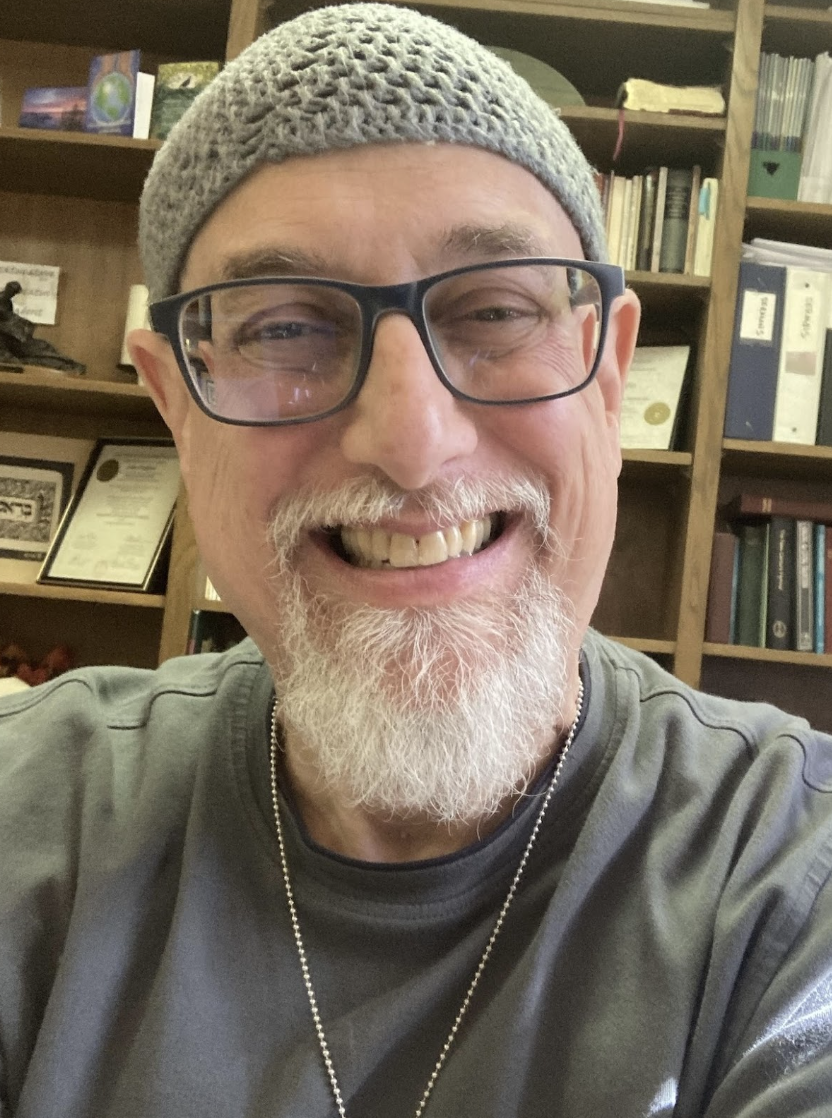
This month’s Sacred Refractions features Reverend Jack Cuffari, a 2012 One Spirit graduate. Rev. Jack Cuffari is ordained as both a UCC Minister, and an Interspiritual / Interfaith Minister. A spiritual director, teacher, preacher, and facilitator.
Jack serves as Pastor at the First Congregational Church of Haworth, NJ and Spiritual Director in Residence at the First Congregational Church of Montclair, NJ.
Jack has developed a Spiritual Direction process called The 5 Doors https://www.the5doors.com/
He is a member of Spiritual Directors International, the Order of Universal Interfaith (OUnI), and is a certified Disaster Relief Chaplain, and trained Hospice Volunteer.
(The following is paraphrased from Ava and Jack’s Zoom interview.)
Four questions. One blessing. A moment of sacred refraction.
What first called you to One Spirit… and why then?
I first heard about One Spirit from Moya Keating, another One Spirit graduate. We had studied together through the Celebrant Foundation and Institute and serendipitously ran into each other in Grand Central Station. We started chatting and Moya told me about this seminary she thought I would love.
At the time, I was deeply involved in the Quaker community. I was representing my meeting in the Montclair Clergy Association and sitting at tables with rabbis, priests, ministers, and imams. I was also doing weddings and offering spiritual support to people from many different backgrounds. I realized I wanted to be of value to more than one tradition. I did not want to narrow my language or my heart to fit into a single lane.
My own journey had already moved through several traditions. I grew up in a devout but progressive Catholic family. Later, as a young parent, I became active in the Presbyterian Church and was ordained as an elder in 1995. During those years I was deeply involved in ministry with people experiencing homelessness in Newark – that work shaped me in lasting ways.
Over time, especially in the years surrounding 9/11 and the rise of militarism, I found myself wrestling with what I was not hearing from the pulpit. I was longing for a deeper embodiment of welcome, nonviolence, and spiritual integrity. The questions I was carrying did not feel fully addressed.
In 2001, I entered the Quaker community. What drew me there was the emphasis on silence, discernment, peace testimony, and compassionate listening. It was not a rejection of what had come before. My questions had simply deepened and I needed a space that could hold them differently.
Quakerism gave me tools for stillness and presence. Over time, I also realized that I missed spoken prayer, music, and liturgy. I did not want to leave silence behind. I wanted to widen the circle.
That widening eventually led me to One Spirit. One Spirit felt like a place where I did not have to choose. It was wide enough to hold all of it.
Where does your ministry live now, and what thread ties your traditions together?
My ministry lives inside the Abrahamic mystic stream, even as I remain gratefully informed by many paths. I’m centered in the teachings of Jesus, and I’m also at home in Judaism and readily connected to Islam. I’ve spent years studying sacred texts and I am particularly drawn to the inner dimensions of practice: the Zohar, Kabbalah, Christian mysticism, and Sufi prayer. A friend once joked that I am a “Jewish Franciscan Quaker,” and honestly that is not entirely inaccurate.
If I had to name the thread that runs through it all, I would name ego.
In the Christian contexts where I serve, I rarely use the word “sin.” I talk about ego. I talk about the ways we default to self-centeredness and how we can become the center of our own universe until there is no room left for anyone else. The work, as I understand it, is not to shame ourselves for being human, but to notice again and again when ego has taken the wheel, and then consciously set it aside so we can be present for others.
This is my micro-theology. All the wisdom traditions are teaching us, in their own languages, to step out of the tight grip of self and return to love. And when we show up for one another, when we make the casserole, when we sit at the bedside, when we choose kindness, I sometimes call that “goding.” Not because God magically does the thing, but because that is how the Holy becomes visible through us.
How has One Spirit shaped you professionally, in how you lead, preach, and accompany others?
One Spirit showed me that integration is not only possible, it is viable. It gave me a lived experience of respectful, collaborative interfaith community. I remember how our small study group of people from very different backgrounds created worship together without conflict and without needing to erase anyone’s truth. There was a kind of reverence in the air toward visiting teachers from different traditions, toward one another, and toward the possibility that Spirit is bigger than any single container.
It also matched my learning style. I have never been especially academic in the traditional sense. I learned how to study later in life, almost by necessity, as a young parent learning scripture. One Spirit helped me grow into my own way of doing theology: curious, textured, embodied, alive.
Over time that formation became deeply practical. I began preaching more, teaching adult Bible study for years, temporarily filling in for a pastor to lead worship and preach, often due to vacation, illness, or transition, and eventually stepping into congregational leadership. My denominational home, the United Church of Christ, offered a kind of spaciousness that fit the interspiritual lens. There is no rigid creed, there is a deep commitment to inclusion and justice, and there is freedom to draw wisdom from wherever it speaks truth. One Spirit helped me trust that I did not have to choose between tradition and wide open Spirit. I could honor both.
In spiritual direction I carry specific Quaker tools that One Spirit resonated with and reinforced: queries. These are questions you do not rush to answer but live with. You pray them, journal them, and allow them to open you over time. I also rely on micro-practices, small acts that return me to connection in the middle of a day. Practices such as, offering a silent prayer of gratitude when I see someone devoted to their path; greeting trees and squirrels like family; and letting the ordinary world remind me that I belong to something larger.
What is the edge of your own practice right now, and what does it require of you?
Trusting Hashem, trusting the Divine Presence, not in a naïve way and not as a guarantee that everything will turn out fine, but as a commitment to sense and remember the Holy in every situation. I am seventy now. I have survived cancer. I do not assume anything. I can be a worrier by nature, and that worry has roots in family history, inherited fear, and the ways our nervous systems are shaped across generations.
So the work is constant: staying awake, staying present, returning again and again.
If I can find the courage to step out of fear, I can trust that I will find enough faith to have hope. And if I believe what I say I believe, that I am part of something infinite and eternal, then my task becomes simpler, though never easy. I take care of this body as best I can. I Do the work I have been given to do. I Help others where I can.
In every moment we do the best we can in the moment. We begin again. Not just every day. Every breath.
This is also why I remain committed to transformation as the heart of spiritual life. We do not engage the Divine simply to feel better, though comfort may come. We engage the Divine so we can become whole, so we can live less like ego barkers and more like people who remember who/what we are.
If you could offer a blessing to One Spirit alumni and those who may find their way here, what would it be?
My dear fellow travelers,
How wonderful it is that we have answered the call to become whole.
That we have stepped away from the rat race and the busyness of the world in order to engage and study work that is holy, work that fosters tolerance, respect, and compassion.
Give yourself credit for the spiritual practice of doing this work.
Trust in the process, and trust in one another. Remember that in every moment you are carried by the Divine. You have that of God, the Divine spark, within you, and you get to manifest it and reflect it back to everyone you encounter every day.
So may that be so.
Amen.
_______________________________
A note from Rev. Ava
The beauty of our One Spirit community is that the light and love keep moving, bending, shimmering, and finding new forms through each of us.
If you are a graduate or student of One Spirit Seminary or ISCC whose work in the world reflects this light and you would like to share your story, I would love to hear from you. Please contact me at beautyandgraceink@gmail.com so we can discuss featuring you in a future Sacred Refractions.
Sacred Refractions is meant to be a living conversation. A collection of stories that show how ministry continues to take shape in every imaginable place and form.