
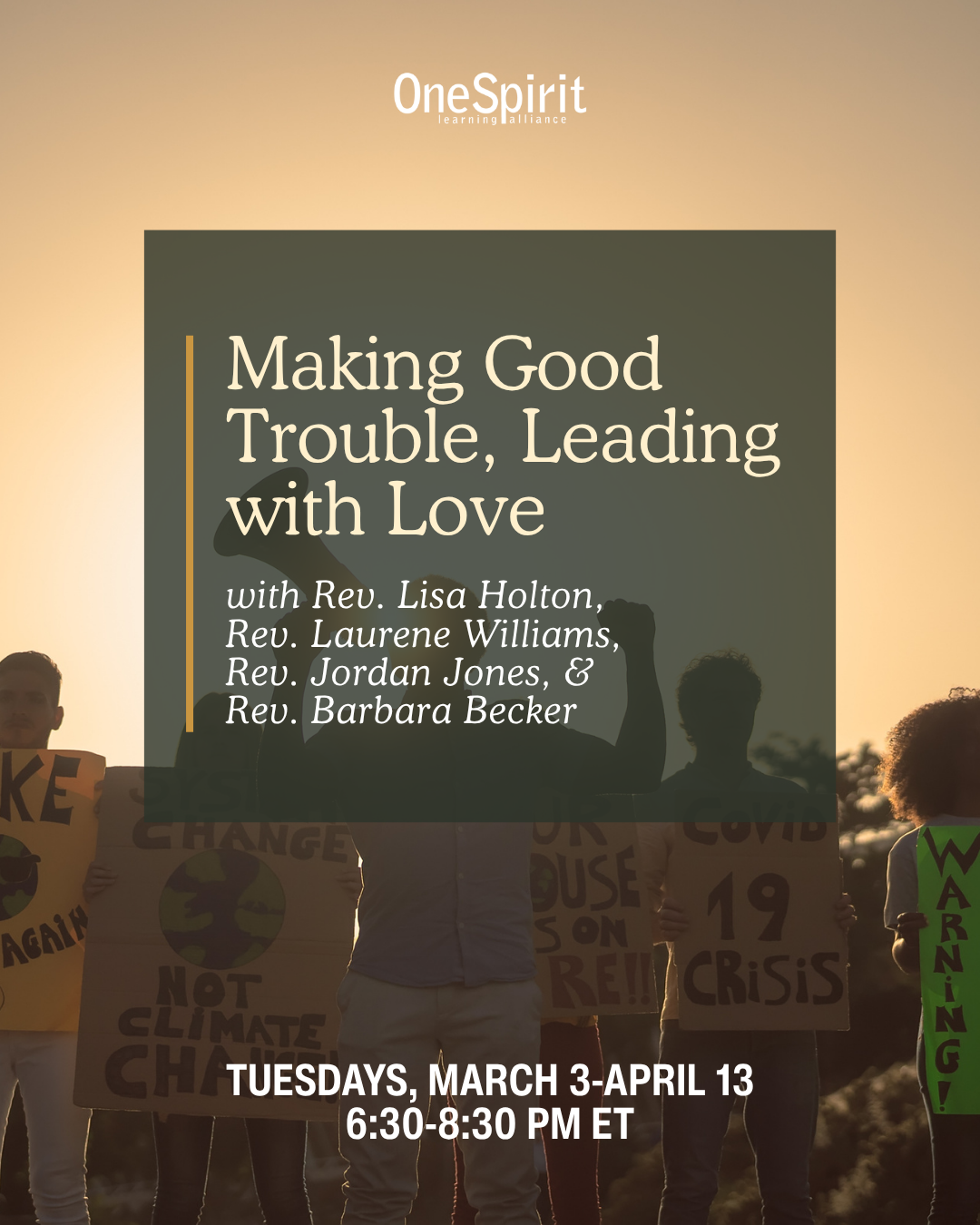
Making Good Trouble, Leading with Love
An Interspiritual Approach to Fighting for Social Justice
With Rev. Lisa Holton, Rev. Laurene Williams, Rev. Jordan Jones, and Rev. Barbara Becker
Tuesdays, March 30, April 6 & 13, 2027
6:30–8:30 PM ET · Live on Zoom · Weekly Recordings Included
General Public $160 · OSLA Affiliated Alumni $125
When Do We Build Bridges, and
When Do We Need to Break Them?
Working for justice isn't always straightforward.
People who care deeply about the same issues can disagree about how to address them. Organizations working toward similar goals may struggle to collaborate. And even with the best intentions, questions about power, privilege, and leadership can create divisions within movements.
When should we speak out? When is it more important to listen or bear witness? When should we follow someone else's lead? And how do we know when a relationship or collaboration is no longer productive?
How do we confront injustice while staying grounded in the love and spiritual values that brought us to this work?
In Making Good Trouble, Leading with Love, four faith leaders involved in social justice work share their experiences and invite you to examine your own. Over three weeks, we'll consider the different ways people respond to injustice, including community organizing, mutual aid, advocacy, sacred witness, protest, and direct action.
Using Wayne Teasdale's understanding of prophetic voice, witness, and action, we'll look at how these approaches contribute to social movements, where they sometimes conflict, and what we can learn from the people doing this work today.
We'll draw on teachings from Howard Thurman, Thomas Merton, Dr. Martin Luther King Jr., Zen Buddhism, Lakota traditions, and adrienne maree brown. We'll consider how these perspectives can inform the choices we make when working with people whose beliefs, experiences, and approaches may differ from our own. We'll also examine how power operates within movements, whose voices are heard, and why effective collaboration sometimes means knowing when to follow rather than lead.
Throughout the workshop, you'll have time to reflect on your own involvement in social justice work.
Through journaling, spiritual practices, conversation, and self-assessment, you'll identify your strengths, consider where you may need to grow, and think about what you want to do next. You'll finish the workshop with a personal social justice roadmap and resources to help you put your ideas into practice.
Leading with love doesn't mean avoiding difficult conversations. It means being willing to have them, recognizing our responsibilities to one another, and making thoughtful choices about how we respond to injustice.
“My One Spirit training has transformed my work in the world. Practicing the power of presence, deep listening, followership, and seeking connection across difference has fueled my work in mutual aid for the undocumented community, fighting for racial justice through transformative arts, and collaborating on immigrant rights across faith traditions.
I have encountered leaders--including the teachers in this workshop-- who are doing extraordinary work in the world; listening to them changed the way I see my own work. I have also seen first-hand the fracturing that happens too easily in our communal spaces and believe that we need to find ways to collaborate across difference to dismantle white supremacy and build new models of liberatory living.
I hope that participants will be transformed in at least three ways:
• Gaining inspiration, insight and practical advice from people on the front lines
• Receiving the gift of time, attention, and tools to focus on their own gifts and blockages in this work
• A personal action plan that will help them move forward after the workshop and find new ways of deepening and expanding the work they do in the world. ”
—Rev. Lisa Holton
What We’ll Explore
Over four weeks, you'll begin putting together the essential pieces of a marketing approach that feels right for your ministry.
Spiritual Teachings & Social Justice
What can spiritual traditions teach us about responding to injustice?
We'll consider the writings of Howard Thurman, Thomas Merton, and Dr. Martin Luther King Jr., alongside the Zen Peacemakers' three tenets, the seven Lakota virtues, and the work of adrienne maree brown.
We'll discuss how these teachings relate to leadership, community responsibility, conflict, and the choices people face when working for social change.
Prophetic Voice, Witness & Action
Wayne Teasdale's teachings on prophetic voice, witness, and action provide the framework for this workshop.
We'll look at how these approaches appear in social justice movements, from public advocacy and protest to accompaniment, mutual aid, and direct action.
We'll consider when these approaches work well together, when they create tension, and how people decide which response is needed.
Power, Privilege & Leadership
Who gets heard in social movements? Whose experiences are overlooked? And how do our own positions of privilege influence the roles we take?
We'll look at power within organizations and coalitions, including why sharing leadership and knowing when to follow are important parts of social justice work.
Working Across Difference
People involved in the same movement don't always agree about strategy, leadership, or priorities.
We'll examine the challenges of working across religious, cultural, and political differences, including how to listen, address disagreements, and decide when collaboration is possible.
Your Role in Social Justice Work
What are you already doing well? Where do you feel uncertain or stuck? What might you want to change?
You'll use self-assessment tools and guided exercises to evaluate your current involvement and develop a personal action plan for what comes next.
Spiritual Practices for the Work Ahead
Spiritual practice can help us examine our intentions, recognize our limitations, and remain connected to the values that guide our actions.
Through shared practices and reflection, we'll consider how spirituality informs the work we do with others.
Our Three-Week Journey
-
With Rev. Lisa Holton and Rev. Laurene Williams
How do we recognize the work that is genuinely ours to do?
Drawing on Howard Thurman's teaching about listening for the sound of the genuine, we'll consider how our experiences, values, and spiritual beliefs influence the ways we respond to injustice.
Through journaling, one-on-one conversation, and group reflection, you'll examine your current involvement in social justice work and the reasons you feel called to it.
You'll identify strengths, consider challenges, and begin thinking about where you may want to make changes.
-
With Rev. Jordan Taylor Jones and Rev. Barbara Becker
What does it mean to use our prophetic voice, bear sacred witness, or take direct action?
Rev. Jordan Taylor Jones and Rev. Barbara Becker will share perspectives from their work in faith communities, organizing, advocacy, and human rights.
We'll examine how voice, witness, and action intersect, when these approaches support one another, and when they come into conflict.
We'll also discuss approaches to de-escalation and working with people from different cultural and spiritual backgrounds.
-
When is it worth continuing a difficult conversation, and when is it time to establish a boundary?
Our final session will focus on conflict, de-escalation, and discernment within communities and social movements.
We'll revisit questions raised during the first two sessions and consider how they apply to the challenges participants encounter in their own work.
You'll also review your personal social justice roadmap and develop an action plan with practical next steps for deepening your involvement or finding new ways to contribute.
What Your Registration Includes
Your registration includes three live, interactive two-hour sessions (six hours total), weekly recordings, and resources you can continue using after the workshop.
◇ Extensive Reading List
Readings and teachings that connect spirituality with social justice, including perspectives from Howard Thurman, Thomas Merton, Dr. Martin Luther King Jr., Zen Buddhism, Lakota traditions, and other voices.
✧ Conversations with Social Justice Leaders
Hear from faith leaders involved in community organizing, advocacy, mutual aid, and other forms of social justice work. Learn about their experiences, challenges, and approaches.
◎ Shared Spiritual Practices & Reflection
Participate in spiritual practices, journaling, and guided reflection to consider how your beliefs and values influence your actions.
✎ Personal Skills Assessment
Use self-assessment tools to identify your strengths, recognize areas for growth, and evaluate your current involvement in social justice work.
◈ De-escalation & Group Facilitation Resources
Receive resources on de-escalation, navigating disagreements, and holding space for difficult group conversations.
❀ Personal Social Justice Roadmap & Action Plan
Develop a personal action plan based on your interests, strengths, and the work you want to pursue.
✦ Small-Group Discussion & Community Connection
Share experiences, hear different perspectives, and connect with others who are involved in or interested in social justice work.
▶ Weekly Workshop Recordings
Revisit the sessions or catch up if you cannot attend live.
Is This Workshop for You?
One Spirit Students & Graduates
You want to bring your interspiritual education into social justice, take a closer look at the work you're already doing, or connect more deeply with spiritual community in action.
Those Interested in Getting Involved
You care about social justice but aren't sure where to begin or what role you might play.
You'll hear from faith leaders about the decisions, relationships, and challenges they encounter in their work.
Ministers, Chaplains & Spiritual Companions
You want to understand how your spiritual beliefs and practices can inform advocacy, organizing, community engagement, or direct service.
Community Organizers, Advocates & Activists
You're already involved in social justice work and want time to examine your approach, learn from other leaders, and consider how to handle conflict and collaborate across differences.
No previous organizing or activism experience is required.
Meet Your Facilitators
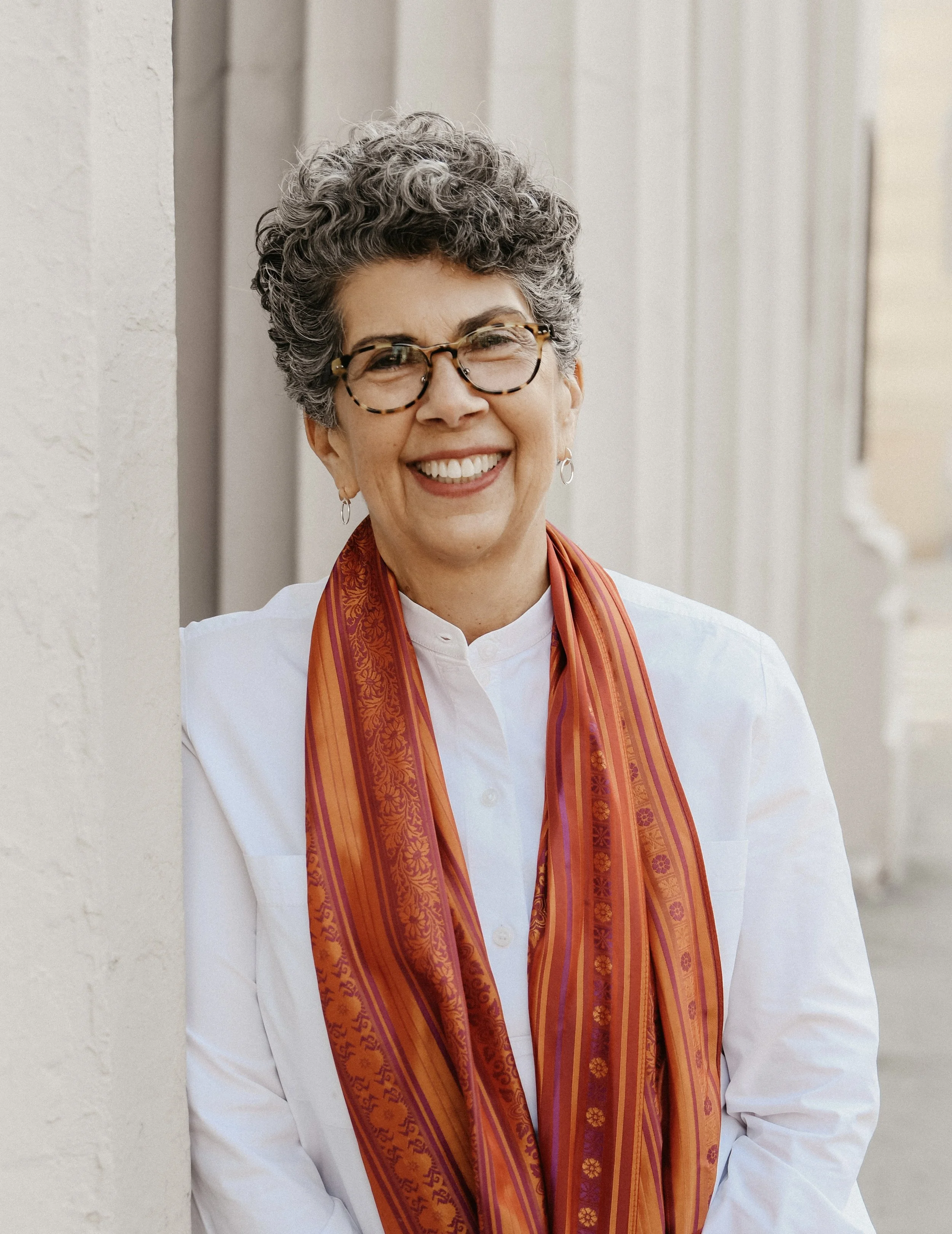
Rev. Lisa Holton (she/her)
Rev. Lisa Holton was ordained as an interfaith minister in 2024 and served for two years as a community minister at Judson Memorial Church.
As founding Board Chair of Judson Commons, she partners with artists and activists to raise resources and create welcoming, uncensored spaces for people working toward social change.
She supports Notes Towards, a programming platform centering Black, brown, Latinx, Asian, queer, nonbinary, and trans artists. She also works closely with Mi Tlalli, a collective of Indigenous queer immigrant and formerly incarcerated organizers supporting undocumented and asylum-seeking individuals and families.
Her work includes mutual aid, community organizing, artistic expression, and advocacy for social justice.

Rev. Laurene Williams (she/her)
Rev. Laurene Williams serves as Secretary of the One Spirit Learning Alliance Board and as a community liaison and member of the educational team.
An activist, counselor, innovator, and minister, she connects spiritual teachings with the experiences and responsibilities of everyday life.
Her work focuses on helping people express love, build relationships, take responsibility, and strengthen their communities.
She believes ministry is an opportunity to serve and empower others while helping people recognize their connection to one another.
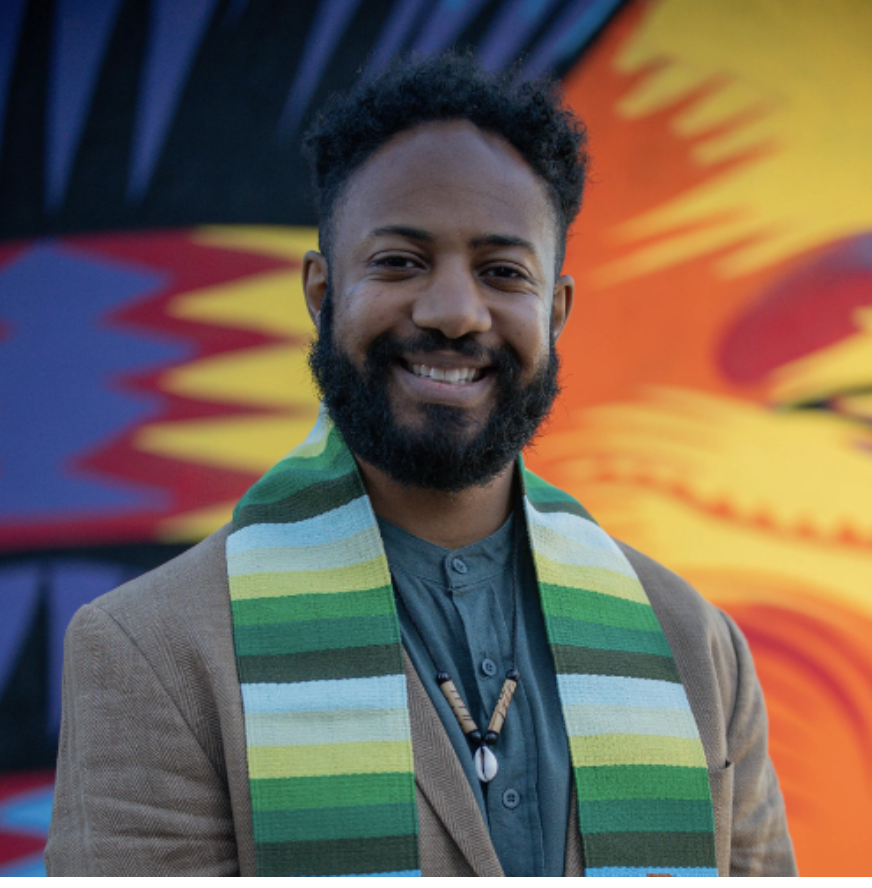
Rev. Jordan Jones (he/him)
Rev. Jordan Taylor Jones serves as Associate Pastor at Metro Hope Church, where his ministry focuses on justice, liberation, and service to his community.
A writer, theologian, and faith-based community organizer, he draws inspiration from Howard Thurman's invitation to listen for "the sound of the genuine." His work brings contemplative spirituality into community organizing, pastoral care, and efforts to address injustice.
He earned his Master of Divinity from Union Theological Seminary, where his scholarship examined contemplative spirituality and the formation of fugitive communities.
He also served as a clergy fellow with Fellowships at Auschwitz for the Study of Professional Ethics, examining ethical leadership during periods of moral and social crisis.
Before entering seminary, he lived in Medellín, Colombia, where he taught English as a Fulbright scholar and worked in journalism. His writing has appeared in The Atlantic, AfroPop Worldwide, and other publications.

Rev. Barbara Becker (she/her)
Rev. Barbara Becker is an ordained interfaith minister, author, and human rights advocate who has spent more than 25 years working with activists and organizations around the world on peace, human rights, and interreligious understanding.
Her work has included collaborations with the United Nations, Human Rights First, the Ms. Foundation for Women, and the Grameen Bank of Bangladesh.
She has also participated in a delegation with Zen Peacemakers and Lakota elders in South Dakota, an experience that informs her understanding of sacred witness and action across spiritual traditions.
Barbara taught communications for social change at Columbia University and The New School for more than a decade.
Her spiritual care experience includes hospice volunteering at Bellevue Hospital and service with the American Red Cross disaster spiritual care team in the Greater New York area.
Her work reflects a longstanding interest in human rights, compassionate presence, and collaboration across religious and cultural differences.
Workshop Registration
General Public: $160
OSLA Affiliated Alumni: $125
Registration includes all three sessions, weekly recordings, an extensive reading list, self-assessment tools, de-escalation and group facilitation resources, and a framework for developing your personal social justice action plan.
Taking more than one workshop?
Buy 3, save 15%. Buy 4, save 20%!
Discount applied automatically at checkout.
OSLA Alumni: Log in to your OSLA Portal to apply your affiliate discount. Not affiliated yet? Learn More about Affiliation
After You Register
You'll receive a confirmation email with instructions for accessing the workshop's Hylo Course Board, where you'll find the Zoom link and workshop materials.
Can't attend live? The recording will be available within 72 hours of the workshop and accessible through June 30, 2027.
Questions? Contact help@1spirit.org.